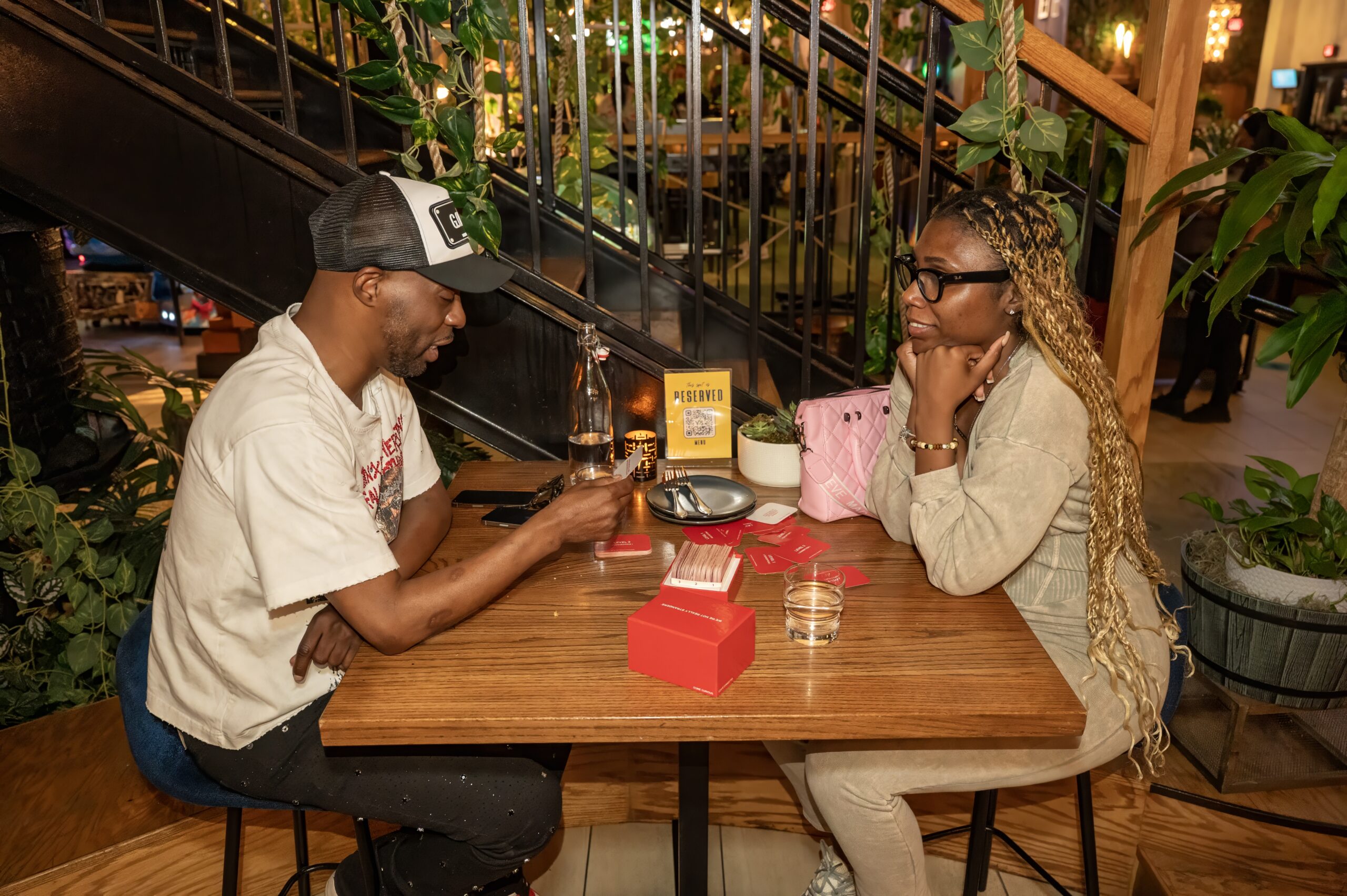
A maintained table tells the guest they are seen. A cluttered table quietly asks the guest to manage part of the experience themselves.
The Story
On a busy Saturday night, a couple sat in the Garden for a date they had been trying to plan for three weeks.
They were not celebrating anything formal. No birthday. No anniversary. No promotion. They had jobs, kids, errands, traffic, and too many nights where dinner meant eating standing up near the kitchen counter. Tonight was their chance to feel like guests.
Their first few minutes felt exactly right.
The Door team welcomed them with energy. The Connector used their names and helped them settle in. The first drinks landed quickly. The first plate hit the table hot. The Amplifier smiled, gave a clear description, and moved with purpose.
The couple relaxed.
They leaned in. They laughed. They started pointing at other things on the menu. The night had momentum.
Then the table slowly changed.
An empty glass stayed near the edge. A finished plate sat between them. Two used shared plates were pushed toward the center. A sauce cup had done its job and now sat empty beside a pile of napkins. The next plate arrived, and the Amplifier found just enough open space to set it down.
Nothing about the moment was rude. Nobody ignored the guests on purpose. Nobody meant to lower the standard.
That is part of why this is easy to miss.
The guest still smiled. The food still tasted good. The music still felt right. The room still had energy. From ten feet away, the table looked fine enough.
At the table, it felt different.
The guest closest to the aisle started moving things around. She stacked one plate on another. She slid the empty glass closer to the edge. She moved a sauce cup out of the way so the new plate could fit. She wiped a small spot with her napkin and then looked back at the menu.
That tiny shift changed her role.
She had walked in wanting to be taken care of. Now she was helping manage the table.
Across the room, a leader named Maya noticed it. She had been watching the section because table maintenance had been a focus all week. She saw the next Amplifier walking toward the same table with another dish in his hands.
Before he reached the guests, Maya stepped beside him.
“What is that table asking for?” she asked.
He looked at the food in his hands.
“They have another plate coming,” he said.
Maya nodded.
“They do. Look at the table.”
He looked again.
This time he saw the story sitting right in front of him. Empty glass. Finished plate. Used share plates. Sauce cup. Napkins. No clear landing zone. Two guests making space for us when we should have been making space for them.
Maya kept her voice calm.
“If we only drop the food, we make their table heavier. If we improve the table, we make the experience lighter.”
The Amplifier set the dish safely at the service station for a moment and grabbed a tray.
When he approached the table, he did not make it awkward.
“Let me reset this for you so you have some room,” he said.
He cleared the finished plate. He removed the empty glass. He picked up the sauce cup. He replaced the used share plates. He made sure the fresh dish had a clean place to land. Then he placed the new plate in the center where both guests could reach it.
The whole thing took less than a minute.
The table changed again.
The guests leaned back. Their shoulders dropped. The menu came back out. The woman smiled and said, “Thank you. We were running out of room.”
That line told the truth.
She had felt it before she said it.
A few minutes later, the Connector came by and asked if they wanted another round or something sweet to finish. This time the table had room for a yes.
They ordered both.
Afterward, Maya pulled the Amplifier aside.
“That was the shift,” she said.
He looked confused.
“The shift?” he asked.
Maya pointed back toward the table.
“They were deciding whether the night was still open. You helped keep it open.”
He looked at the couple again. They were back in the experience. Phones down. Drinks refreshed. Table clean. Food in reach. No clutter sitting between them.
Maya continued.
“Most guests will never say, ‘I would have ordered more if you cleared my table.’ They will just order less. They will stay a little shorter. They will leave saying it was good, while feeling like something was slightly off.”
The Amplifier nodded.
“I thought table maintenance was mostly about cleaning.”
Maya shook her head.
“Cleaning is part of it. The real job is noticing. A clean table tells the guest, we see you. We are ready for you. You can stay with us.”
Reflection
Table maintenance is one of the clearest ways we turn care into action. The guest may not know our checklist. They may not know S.E.E. and Stay. They may not know full hands in and full hands out. They know how the table makes them feel.
A cluttered table creates friction. It pulls attention away from the people, the food, the drink, and the moment. It makes the guest organize, stack, shift, reach, and wonder. Once the guest starts managing the table, part of the hospitality has already been handed back to them.
A maintained table creates ease. It gives the guest room to relax, room to share, room to order, and room to keep enjoying the night. That is where hospitality and sales connect. We cannot make someone order another drink, another plate, or dessert. We can create the conditions where the next yes feels natural.
This is why table maintenance cannot be treated like a side task. It is silent service. It is anticipation. It is empathy. It is one of the simplest ways we show a guest they are being watched over without making them feel watched.
Key Takeaways
1. Every time we approach a table, the table should be better when we leave.
2. Empty glasses, finished plates, used share plates, sauce cups, napkins, and missing tools are signals.
3. A cluttered table makes the guest manage their own experience.
4. A maintained table creates comfort, focus, and room for the next order.
5. Full hands in and full hands out protects the guest, the team, and the pace of service.
6. Leaders must coach this in real time until it becomes instinct.
Moral
The table tells the truth before the guest does. When the table is cared for, the guest feels cared for. When the guest feels cared for, they relax, stay, order, remember, and return.
Every touch is a chance to say, without words, we see you.
June 2, 2026

View comments
+ Leave a comment